Choose yourself some plants for your pots
Almost any plant will grow in a pot. Not all will thank you for it, and some won’t sufficiently reward the effort but, excitingly, the range of plants that excel in containers is extensive and diverse. Many more container-worthy varieties are introduced each year and so choosing can be simultaneously thrilling and daunting. Take your time, though, and relish every moment. A number of the most attractive and useful plants that I’ve come to rely on I'll introduce to you through this website, on Instagram and in my books. A wander on the internet, as ever, will provide more detail.

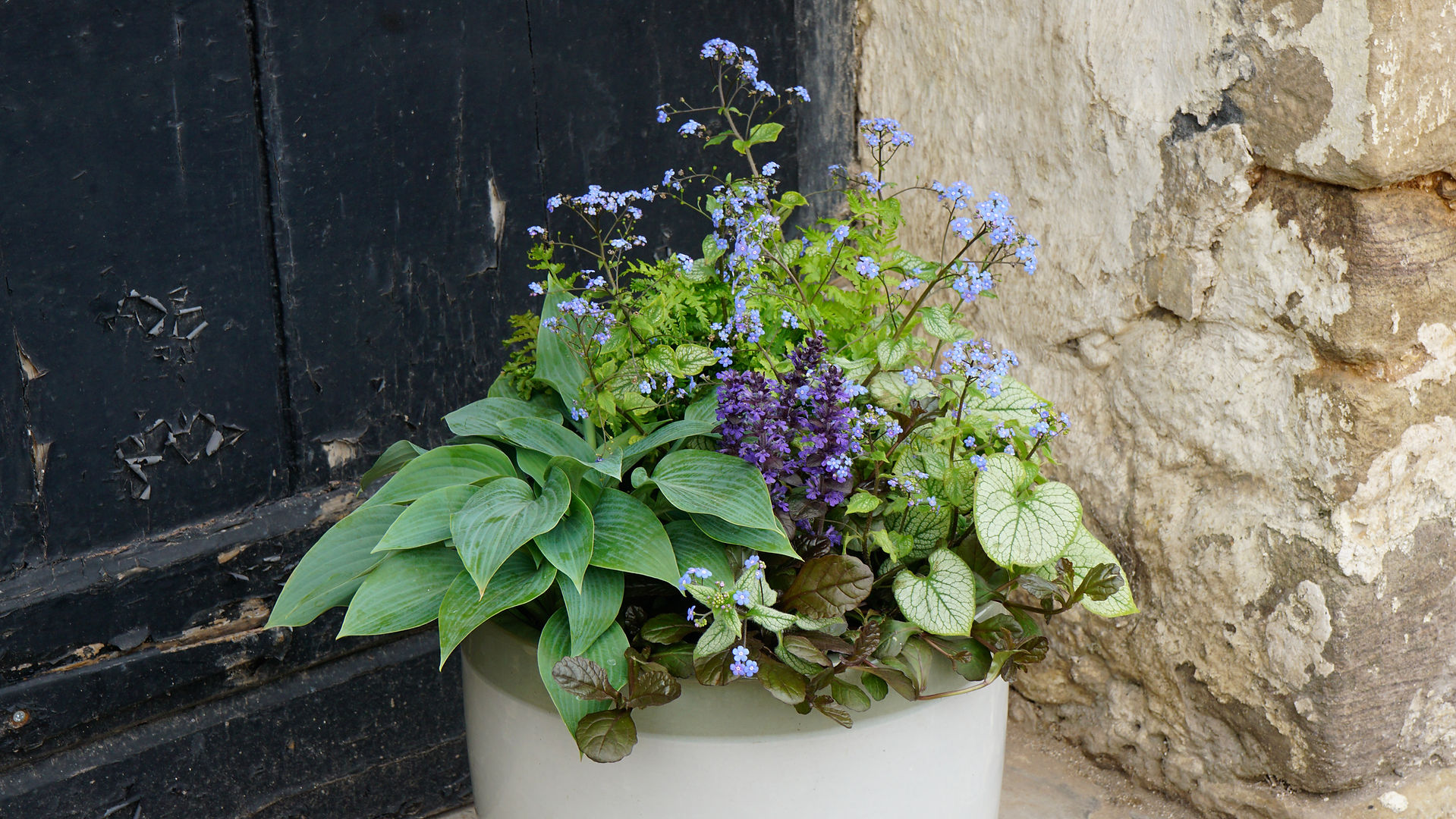
Plants for containers can be roughly divided into two major categories: long-term structural specimens that will serve for many years, and the more temporary seasonal subjects that may only be in flower for weeks or months. The latter comprises annuals, biennials, tender perennials, bulbs and vegetables, while trees, shrubs, conifers, climbing plants, perennials and grasses are among the more permanent.
In order to earn a place in one of my containers, a plant must fulfil certain basic requirements. Primarily, it should have as long a period of interest as possible. There are exceptions, including tulips and lilies, but nobody wishes to replant every few weeks. The more seasons in which a plant has something to offer the better, especially where space is at a premium. Plants that flower, fruit and are dressed in attractive leaves head the list. A first-rate long-term container plant should also ideally be relatively compact and not over-vigorous, although this is a loose rule that can be broken, especially for dramatic effect.
Another consideration is the specific cultural requirement of each plant. This is especially important for longer-term subjects. A little homework will help ensure that plant and site are well matched and that you are able to cater for its needs as closely as possible. Because you can exercise a degree of control over their growing conditions, certain plants may even perform better than if in the ground.
There’s no point, for instance, in planting sun-loving marguerite daisies (argyranthemum) in a container plunged into half light under a tree, as their growth will be straggly and their flowers sparse. Similarly, Japanese maples that thrive in cool, sheltered spots are not sensible candidates for a sun trap or an exposed, windy position. I’ve made plenty of mistakes myself but in so doing have learnt that you never know what you may get away with. The saving grace with containers is that if you recognise an error in good time, you can relocate your wrongly sited plant to a more appropriate spot swiftly and with relative ease.
Comments